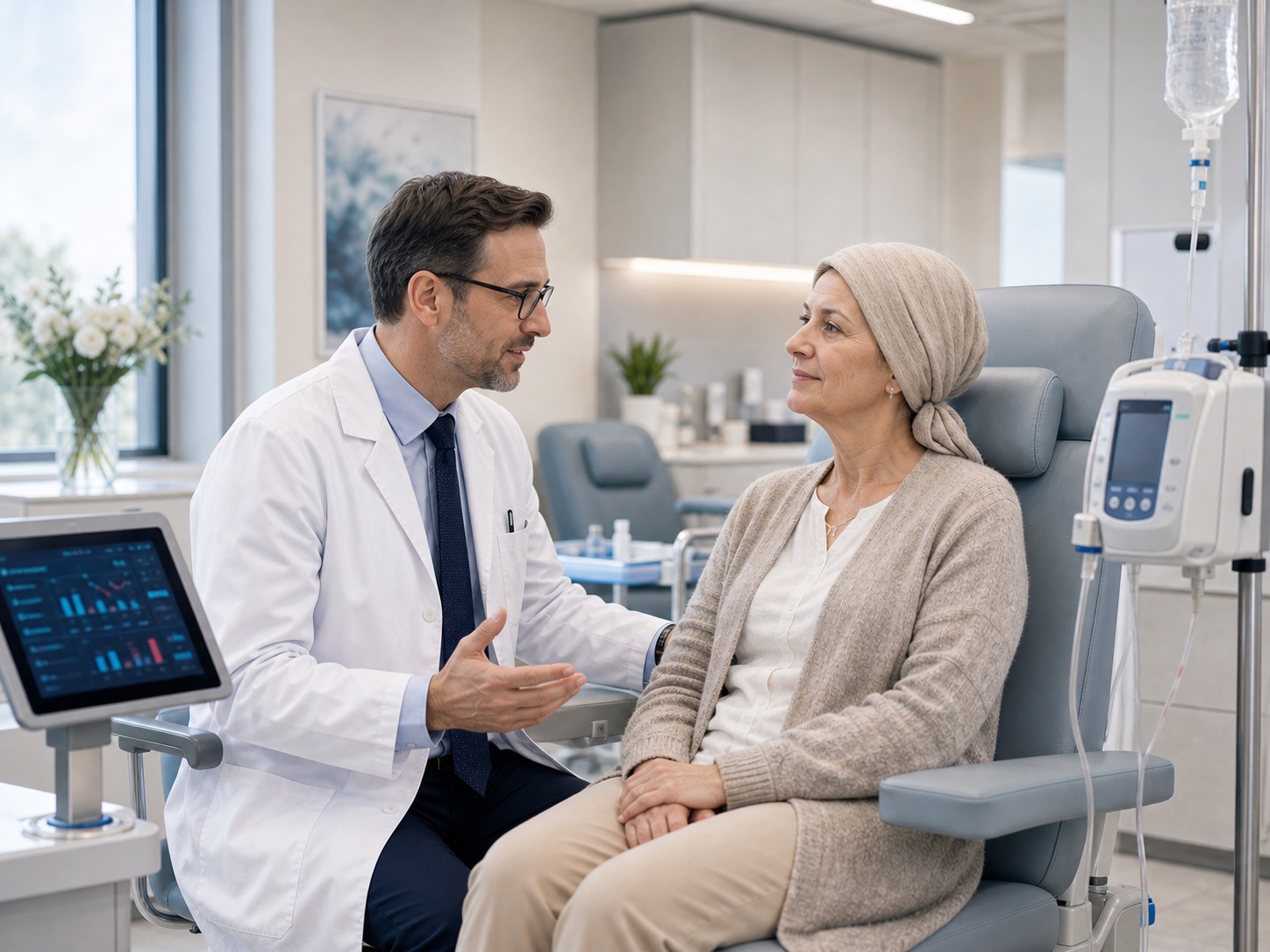
Oncology Center
At our Oncology Center, we treat cancer while caring for the whole person. Combining evidence-based, metabolism-focused strategies with advanced imaging and a range of integrative therapies, our team builds a personalised plan for each patient — one designed to make conventional treatment work harder, ease its burden, and support quality of life at every stage of the journey.

Dr. Abdul Kadir Slocum
Integrative Medical Oncology · ChemoThermia Oncology Center
Dr. Abdul Kadir Slocum is a co-founder of ChemoThermia Oncology Center, which was established in Istanbul in 2010 by Prof. Bülent Berkarda, Prof. Mehmet Salih İyikesici and Dr. Slocum to deliver cancer care through an integrative approach. The centre's work centres on Metabolically Supported Chemotherapy — combining conventional chemotherapy with metabolic and supportive strategies — and the team has published feasibility studies and case reports on this combined protocol in advanced cancers. A frequent international speaker on integrative oncology, Dr. Slocum leads a multidisciplinary team delivering imaging, treatment and supportive care under one roof.
The Clinical Team- Dr. Abdul Kadir Slocum — Co-Founder, Integrative Medical Oncology
- Prof. Mehmet Salih İyikesici — Co-Founder, Medical Oncology
- Prof. Bülent Berkarda — Founding Oncologist
- Medical oncology, radiology & supportive-care team
- Imaging, treatment & supportive care under one roof
- Personalised, multidisciplinary protocols
ChemoThermia Oncology Center
Istanbul, Türkiye
ChemoThermia is a full-service oncology centre on the European side of Istanbul, where diagnostics, treatment and supportive care are delivered seamlessly under one roof. On-site PET-CT, MRI and laboratory monitoring let the team plan each protocol precisely and track how the cancer responds, while treatment suites and supportive-care facilities keep the whole journey in one place for day and inpatient guests.
Our Integrative Approach
Our approach is built on the idea that cancer is not only a genetic disease but also one of metabolic dysregulation — cancer cells use glucose very differently from healthy cells. Rather than replacing conventional oncology, we work to strengthen it: each plan is designed to target the metabolism of cancer cells and the tumour micro-environment alongside standard chemotherapy, with the aim of supporting its effect while reducing the burden on the patient. Every plan is personalised, draws on advanced imaging, and is intended to complement — not substitute for — the evidence-based care guided by each patient's own oncology team.
What Is Metabolically Supported Chemotherapy?
Metabolically Supported Chemotherapy (MSCT) is the centre's core protocol — a refinement of insulin-potentiated therapy. Before chemotherapy, a period of fasting (around 12 hours) and a pharmacological dose of regular insulin are used to bring on a brief, controlled, mild drop in blood sugar. The aim is to exploit the way cancer cells depend on glucose, so that lower doses of chemotherapy can be concentrated where they are most needed while sparing healthy tissue and easing side effects. MSCT is always given as part of conventional chemotherapy under close medical supervision, not as an alternative to it, and it is combined with a ketogenic diet, hyperthermia and hyperbaric oxygen therapy as part of a single, coordinated programme.
Cancers We Support
The centre works mainly with solid tumours, including advanced and metastatic disease. Whether the approach is appropriate is always decided individually, in coordination with each patient's own oncologist.
Breast Cancer
Including triple-negative and advanced or metastatic disease, supported alongside conventional oncological treatment.
Lung Cancer
Non-small cell lung cancer (NSCLC), including advanced stages — one of the cancers featured in the centre's published case work.
Pancreatic Cancer
A notoriously difficult cancer where the integrative, metabolism-focused protocol is applied alongside standard therapy.
Gastrointestinal Cancers
Including gastric (stomach), colorectal and rectal cancers.
Other Solid Tumours
A range of other solid tumours are considered case by case after review of diagnosis and imaging.
Advanced & Metastatic Disease
The centre frequently supports patients with advanced, end-stage or metastatic cancer who are continuing conventional treatment.
Treatments & Therapies
A personalised protocol combines the core metabolic chemotherapy method with a range of supportive therapies, all delivered in one place.
Metabolically Supported Chemotherapy (MSCT)
The centre's primary method — conventional chemotherapy combined with metabolic preparation (fasting and insulin) to concentrate treatment on cancer cells and ease its burden.
Hyperthermia (Oncothermia)
Local or whole-body heating intended to weaken cancer cells and support the effect of chemotherapy and radiotherapy.
Hyperbaric Oxygen Therapy (HBOT)
Sessions in a pressurised oxygen chamber to raise tissue oxygenation, used as part of the combined metabolic protocol.
Ketogenic Oncological Nutrition
A medically supervised ketogenic diet and fasting protocols designed to target the way cancer cells use glucose.
Supportive Infusions
High-dose vitamin C, 2-DG (2-deoxy-D-glucose) and other nutrient infusions used to support the overall programme.
Phyto & Repurposed Support
Mistletoe therapy, medicinal mushrooms and herbs, repurposed medicines and photo-pharmaceutical supplements, selected individually.
Diagnostics & Monitoring
Because treatment is tailored to each patient and adjusted as the cancer responds, accurate diagnostics matter at every stage. On-site PET-CT, MRI and laboratory monitoring let the team plan the protocol precisely, watch how the disease and the patient respond, and refine therapy over time — all within the same centre, without sending patients elsewhere for imaging.
Your Treatment Journey
From a first remote review to follow-up, your programme is planned and coordinated around you.
-
01
Remote case review you share your diagnosis, pathology, reports and imaging so the team can advise whether the approach may suit you before you travel
-
02
Consultation & evaluation on arrival, your history and imaging are reviewed and discussed with you and, where possible, your own oncologist
-
03
Personalised protocol a metabolism-focused, integrative plan is designed around your diagnosis, stage and goals
-
04
Metabolically Supported Chemotherapy conventional chemotherapy is delivered with metabolic preparation under close supervision
-
05
Combined supportive therapies hyperthermia, hyperbaric oxygen, nutrition and infusions are added as appropriate
-
06
Response monitoring PET-CT, MRI and lab tests track the response and the protocol is adjusted accordingly
-
07
Supportive & follow-up care symptom, nutrition and quality-of-life support continues, with guidance for ongoing care at home
Whole-Person & Supportive Care
Alongside the medical protocol, the centre pays close attention to how each patient feels day to day. Nutrition, symptom management and emotional and practical support are part of the programme, with the goal of helping patients stay as strong, comfortable and well-supported as possible through treatment. Caring for the whole person — not only the tumour — is central to how the team works.
What the Approach Aims For
Cancer outcomes vary from person to person and nothing here is a promise of cure. The integrative approach is designed with these goals in mind:
- To support and complement conventional, evidence-based cancer treatment
- To concentrate chemotherapy where it is most needed and ease its side-effect burden
- To help patients tolerate and stay on their treatment
- To support strength, nutrition and quality of life throughout
- To keep imaging-guided monitoring and adjustment at the centre of care
- To coordinate every therapy around the individual patient
Important to Know
Integrative oncology is not right for every situation, and it works best in partnership with conventional care.
A good fit
Patients who are continuing or considering conventional chemotherapy and want an integrative, metabolism-focused programme delivered alongside it — including those with advanced or metastatic solid tumours — after review of their diagnosis and imaging.
Discuss first
This approach complements, and does not replace, standard cancer treatment, and it is not a guaranteed cure. Suitability, safety and how it fits your current plan should always be decided individually, together with the centre's physicians and your own oncology team.
Coordinated, Whole-Person Care
Cancer care is never one-size-fits-all. Every plan is tailored and closely supervised, and the team coordinates each therapy around you so treatment stays as effective and as bearable as possible. Outcomes vary from person to person, but the commitment does not — to care for the whole person with the patient-first standards that define every Mest Assistance centre.
Frequently Asked Questions
What is Metabolically Supported Chemotherapy (MSCT)?
It is the centre's core protocol: before chemotherapy, a short fast and a pharmacological dose of insulin create a brief, controlled, mild drop in blood sugar, with the aim of exploiting cancer cells' dependence on glucose so that lower chemotherapy doses can be concentrated where they are most needed and side effects reduced. It is always given under close medical supervision as part of conventional chemotherapy.
Does this replace my normal chemotherapy?
No. The approach is designed to complement and support conventional, evidence-based cancer treatment — not to replace it. It works best in coordination with your own oncology team.
Which cancers does the centre work with?
Mainly solid tumours, including breast (such as triple-negative), lung (NSCLC), pancreatic and gastrointestinal cancers, and often advanced or metastatic disease. Whether the approach is appropriate is decided case by case.
What other therapies are combined with MSCT?
A ketogenic oncological diet and fasting, local and whole-body hyperthermia (oncothermia), hyperbaric oxygen therapy, supportive infusions (such as high-dose vitamin C and 2-DG), and selected phyto and repurposed supports — all coordinated in one programme.
How is treatment planned and monitored?
With on-site PET-CT, MRI and laboratory testing, so the protocol can be tailored precisely and adjusted to how your cancer responds, without travelling elsewhere for imaging.
Can I be assessed before travelling to Istanbul?
Yes. You can share your diagnosis, pathology, reports and imaging for a remote review so the team can advise whether the approach may suit you before you travel.
Is it a cure?
No. Cancer outcomes vary from person to person and the centre makes no promise of cure. The aim is to support conventional treatment, ease its burden and protect quality of life — decisions are always individual.
How do I arrange care?
ChemoThermia Oncology Center is on the European side of Istanbul. Your remote review, appointment, travel and stay are all arranged through the Mest Assistance call centre, who coordinate everything for you — just get in touch to begin.
Inside the Centre
Photography coming soon.





Interested in one of our centres?
Whether you are a patient, an insurer, or an institutional partner, our team is ready to tell you more about any of our centres and guide you to the right care. Reach out and we will be glad to help you take the next step.
Contact Mest Assistance